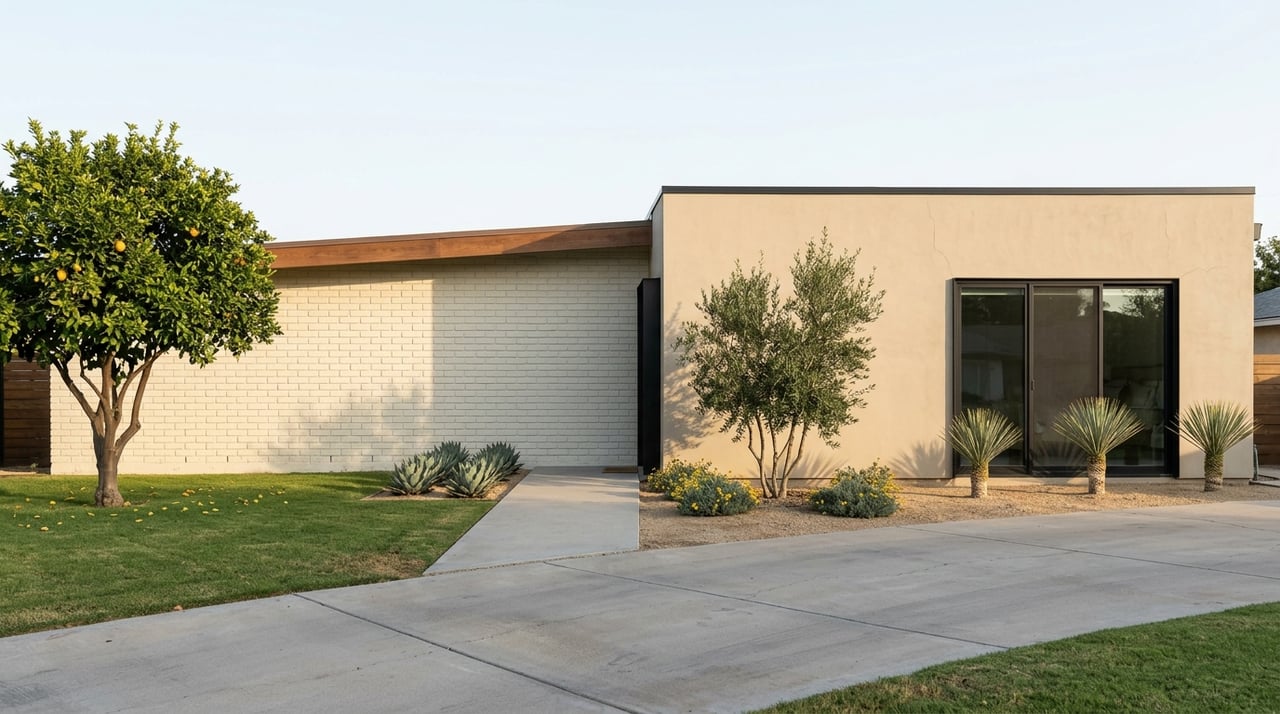
Wondering whether to remodel or rebuild in Arcadia? In a neighborhood where lot value, design potential, and permitting can all shape the outcome, that decision is rarely simple. If you are weighing an older home against a full custom reset, the right path starts with the parcel, the existing structure, and the city rules that apply. Let’s break down what matters most in Arcadia so you can move forward with more clarity.
Why Arcadia Requires a Different Lens
Arcadia has long been associated with larger estate-style lots and a distinct residential character. According to the City of Phoenix historic survey, the original 1919 Arcadia plat featured roughly five- to ten-acre lots and minimum house-cost requirements, with later replats still emphasizing an exclusive estate pattern.
That history still matters today because the land itself often carries significant value. Redfin’s May 2026 data shows Arcadia with a median sale price of $1,324,554, compared with $463,967 for Phoenix overall. Homes in Arcadia were also selling in about 56 days and at 95.7% of list price, which points to a premium market where the lot, setting, and buildable envelope can matter nearly as much as the house already on it.
Confirm the City First
Before you compare remodel costs to rebuild costs, confirm whether the property is in Phoenix or Scottsdale. The broader Arcadia area crosses into Scottsdale in some places, and the permitting authority changes depending on the city.
That first step is easy to overlook, but it can affect timelines, submittal requirements, review standards, and your overall strategy. If you start planning under the wrong jurisdiction, you can lose time and money before real design work even begins.
When Remodeling Often Makes More Sense
A remodel is usually the better fit when the existing house still has a solid foundation for improvement. If the structure is fundamentally sound, the layout is workable, and your goals center on interior updates or a moderate addition, remodeling can be the cleaner path.
Phoenix notes that many residential remodels and some additions are processed through residential plan review, and minor work may be approved over the counter. That can make the process more straightforward than a full teardown and new build, especially if you are not trying to fully reinvent the footprint.
Good Remodel Candidates
You may want to lean toward remodeling if the home checks several of these boxes:
- The structure is sound
- The floor plan can be improved without replacing most of the shell
- You want updated finishes, systems, or room flow rather than a totally new concept
- The home may have historic value
- You want to preserve existing street presence or mature landscaping
In Arcadia, keeping original massing and site character can support long-term appeal. That is especially relevant in a neighborhood known for established lots and legacy estate patterns.
Historic Status Can Shift the Decision
If a property is listed on the Phoenix Historic Property Register, it is rezoned with HP or HP-L overlays. Phoenix says exterior changes are reviewed, and demolition of contributing properties can be delayed up to one year, or up to three years for HP-L properties, while alternatives are explored.
That does not mean you cannot improve a historic property. It does mean remodeling is often the safer starting point, because historic review can directly affect exterior work and demolition timing. Phoenix also notes that listed properties may qualify for city incentives, which can further support a remodel-first strategy.
When Rebuilding Often Makes More Sense
Sometimes the house is simply too compromised, too constrained, or too outdated for a practical remodel. If bringing it up to your standards would require near-total replacement anyway, a teardown and rebuild may offer a better long-term result.
This is especially true when the lot can support a much stronger custom product than the current home. In a premium Arcadia setting, the highest and best use of a parcel may be shaped less by the existing structure and more by what can be built within the site’s actual envelope.
Signs a Rebuild May Be the Better Move
A rebuild often becomes more compelling when:
- The layout is poor and difficult to fix efficiently
- Core systems are outdated enough to require major replacement
- The home would need such extensive work that remodel costs approach new construction costs
- The lot can support a meaningfully larger or better-designed custom home
- The property is non-historic, which can simplify the demolition path
Phoenix requires new homes to go through full residential plan submittals before permit issuance. That includes plans, calculations, a plot plan, design review, and any required grading or hillside approvals.
Lot Width and Envelope Matter
On some Arcadia parcels, the real question is not whether you can rebuild, but whether the lot supports the house you have in mind. Phoenix’s Single-Family Design Review can apply to new construction on individual lots 65 feet wide or less, or when zoning stipulations or overlay rules require it. Phoenix also notes that this design review does not apply to additions or remodels.
That distinction matters. If you are considering a new build, lot width, setbacks, zoning, and lot coverage become central to feasibility very early in the process.
Demolition Is Not a Shortcut
If you are leaning toward teardown, it helps to understand that demolition is still a regulated process. Phoenix requires a demolition permit for total, partial, or interior demolition, and demolition cannot begin until the permit is issued.
The city also states that each structure needs its own demolition permit. If the property has historic status, a separate review path applies, and Maricopa County air-quality rules still apply for asbestos compliance.
Arcadia Due Diligence Before You Decide
Whether you remodel or rebuild, the smartest early work happens before you commit to plans. In a neighborhood like Arcadia, parcel-level underwriting can save you from expensive assumptions.
Start With These Checks
Before moving into design, review:
- Whether the parcel is in Phoenix or Scottsdale
- Whether the property has any historic designation or historic eligibility concerns
- Official lot size and existing structure dimensions through Maricopa County Assessor records
- Zoning, setbacks, and lot coverage through Phoenix tools such as My Community Map, if the parcel is in Phoenix
- Whether hillside review may apply for sloped sites near Camelback Mountain or similar terrain
- Whether your scope involves remodel, addition, demolition, or full new construction permits
Phoenix says construction permits are required for new homes, remodels or additions, demolition, patio covers, fences and walls, and many other residential projects. As of April 27, 2026, the city routes residential plan review, permitting, inspections, historic preservation, and related workflows through the SHAPE PHX portal.
Permitting Realities to Expect
Permitting is often where project assumptions get tested. For remodels and additions, Phoenix says the submittal usually includes two sets of plans. For new homes or additions, the city also requires a plot plan showing the lot and house orientation.
All permitted residential jobs require inspections. Phoenix also notes that some permit types, including hillside and grading permits, require a job meeting before work begins.
What This Means for Your Timeline
In practical terms, remodels can sometimes move faster when the work is limited and the shell remains largely intact. A new build usually involves more review layers, more documentation, and more variables tied to the actual lot.
That does not automatically make rebuilding the wrong choice. It simply means the payoff needs to justify the added complexity.
A Practical Way to Compare Remodel vs. Rebuild
If you are trying to make a disciplined decision, compare the property through three lenses: the house, the lot, and the approval path.
| Decision Lens | Remodel | Rebuild |
|---|---|---|
| Existing structure | Best when sound and adaptable | Best when highly constrained or outdated |
| Design flexibility | Moderate | Highest |
| Historic sensitivity | Often safer starting point | Can be delayed or limited if historic |
| Permitting complexity | Often simpler | Usually more involved |
| Lot potential | Useful if current house already fits site | Strongest when lot can support a better end product |
For many Arcadia owners, the key question is simple: are you improving a good house on a great lot, or are you replacing a weak house on a great lot? That distinction can shape both budget discipline and long-term value.
How to Think About the Decision in Arcadia
In a premium neighborhood, it is easy to get pulled toward the most ambitious option. But the better move is the one that fits the parcel, respects the approval path, and aligns with your goals for design, timing, and resale.
An intact non-historic home with a workable layout may be an excellent remodel candidate. A non-historic lot with a poor layout, outdated systems, and room for a stronger custom product may justify a rebuild. A potentially historic property usually deserves a remodel-first review before you assume teardown is realistic.
If you are evaluating an Arcadia property, I can help you think through the lot, the market positioning, and the practical tradeoffs before you commit. For strategic guidance on Arcadia, Scottsdale, and nearby luxury opportunities, connect with Residence Collective.
FAQs
Should you remodel or rebuild a home in Arcadia?
- It depends on the structure, lot potential, and city review path. In Arcadia, remodeling often makes sense for sound homes with workable layouts, while rebuilding may fit better when the home is highly outdated and the lot can support a stronger custom result.
Does Arcadia fall under Phoenix or Scottsdale permits?
- Some Arcadia properties are in Phoenix and others are in Scottsdale, so you should confirm the parcel jurisdiction first because the permitting authority changes by city.
Can you tear down a historic home in Arcadia?
- Historic properties in Phoenix follow a separate review path, and demolition of contributing properties can be delayed up to one year, or up to three years for HP-L properties, while alternatives are explored.
What permits are needed for an Arcadia remodel or rebuild?
- Phoenix says permits are required for new homes, remodels or additions, demolition, patio covers, fences and walls, and many other residential projects, with reviews and inspections handled through the city’s process.
Why does lot width matter for an Arcadia rebuild?
- In Phoenix, Single-Family Design Review can apply to new construction on individual lots 65 feet wide or less, or when zoning stipulations or overlays require it, so lot width can directly affect feasibility for a new build.