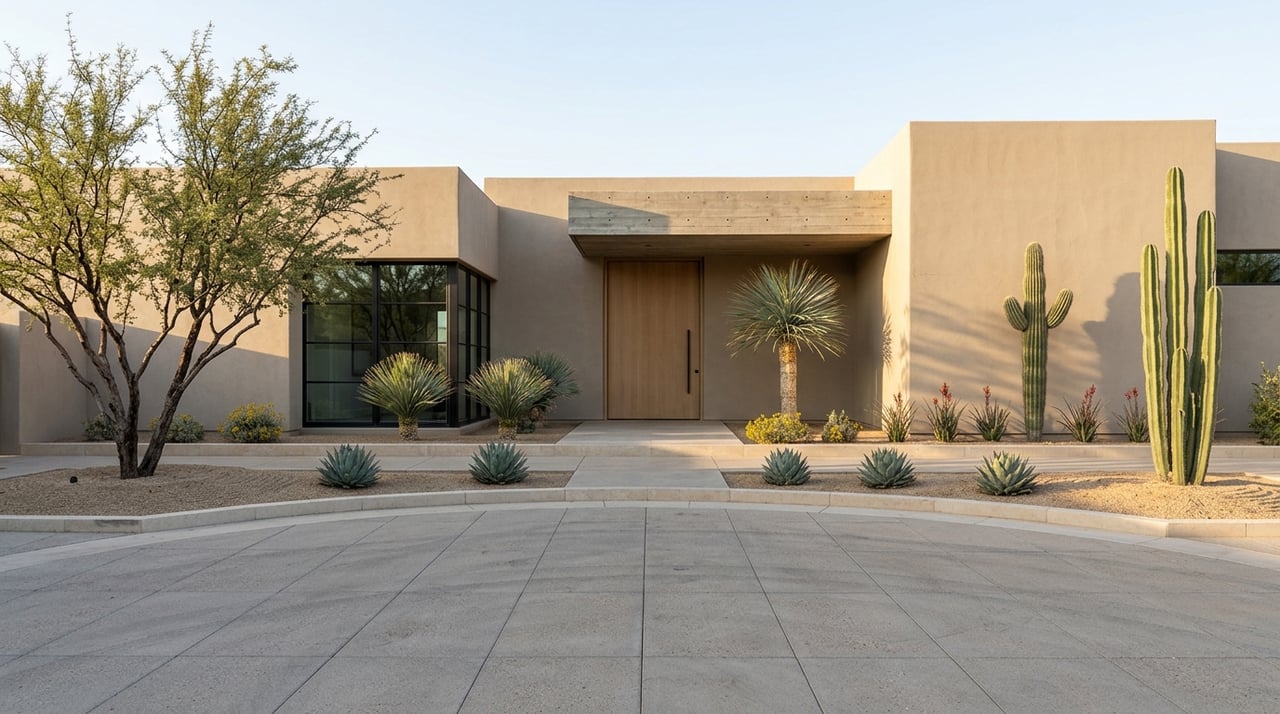
Choosing between Paradise Valley and Scottsdale for a luxury home is not just about price or square footage. It is about how you want to live, what kind of setting feels right, and how much privacy, access, and property complexity you want day to day. If you are weighing both markets, this guide will help you compare the lifestyle, zoning, design, and ownership considerations that matter most. Let’s dive in.
Paradise Valley vs Scottsdale at a Glance
If you want a simple starting point, think of Paradise Valley as the more purely residential luxury market and Scottsdale as the broader lifestyle market.
Paradise Valley describes itself as a premier, low-density residential community with limited non-residential uses and little undeveloped land left. Growth there is mostly infill or redevelopment, which supports its estate-driven feel. Scottsdale offers a wider range of luxury settings, from foothills estates to urban-style infill, plus a deeper mix of dining, retail, arts, parks, and trails.
For many buyers, the real question is not which town is better. It is which town better matches your priorities.
Paradise Valley Lifestyle
Paradise Valley tends to appeal to buyers who want space, privacy, and a quieter luxury experience. The town’s planning framework emphasizes low-density living, design excellence, and protection of the Sonoran Desert landscape.
That shows up in the day-to-day feel. Instead of a downtown-centered experience, Paradise Valley leans into a resort-and-estate identity, with well-known resorts and clubs such as Camelback Inn, Mountain Shadows, Omni Montelucia, Sanctuary Camelback Mountain, Hermosa Inn, Scottsdale Plaza Resort, and SmokeTree Resort. Golf options listed by the town include Marriott Camelback Golf Club, Mountain Shadows Short Course, and Paradise Valley Country Club.
If your ideal home base feels private, residential, and tucked into the landscape, Paradise Valley often checks those boxes.
Why buyers choose Paradise Valley
Buyers often gravitate to Paradise Valley for a few clear reasons:
- Larger-lot residential character
- Strong privacy orientation
- Custom-home setting
- Quiet, resort-centered surroundings
- Limited commercial presence
For second-home buyers, executives, and anyone who values a calmer environment, this can be a strong fit.
Scottsdale Lifestyle
Scottsdale gives you more variety. You can find luxury homes in desert-focused foothill settings, golf-oriented communities, and more design-forward infill areas closer to shopping, dining, and culture.
The city’s public amenities are much broader in scale. Old Town alone has more than 90 restaurants, 320 retail shops, and more than 80 art galleries. Scottsdale also highlights the McDowell Sonoran Preserve, with more than 60 miles of trails, and the 11-mile Indian Bend Wash Greenbelt, which includes parks, lakes, paths, and golf courses.
If you want luxury living with easier access to activity, Scottsdale usually offers more options and more neighborhood variety.
Why buyers choose Scottsdale
Scottsdale often fits buyers who want:
- More arts, dining, and shopping access
- Wider luxury submarket selection
- Strong outdoor amenity access
- A choice between desert, resort, and more urban-feeling settings
- Flexibility across different lot sizes and property types
That range can be especially appealing if you are relocating, splitting time between cities, or trying to balance lifestyle with investment logic.
Lot Sizes and Zoning Differences
One of the biggest practical differences between Paradise Valley and Scottsdale is how each market handles residential land.
In Paradise Valley, the residential structure centers on R-43 and R-35 zoning. R-43 corresponds to one acre, while R-35 corresponds to 35,000 square feet. The town also allows cluster plans on tracts of 8 or more acres, but reduced lots in that cluster district generally cannot go below 20,000 square feet.
Scottsdale has a broader ladder of single-family zoning districts, including R1-190, R1-130, R1-70, R1-43, and R1-35, along with resort and multifamily districts. Official city standards list minimum lot areas of 190,000 square feet in R1-190, 70,000 in R1-70, 43,000 in R1-43, and 35,000 in R1-35.
What that means for you
In practical terms, Paradise Valley tends to deliver a more consistent estate pattern. Scottsdale can also offer large-lot luxury, especially in certain foothills areas, but its luxury housing stock spans a wider range of settings and densities.
If you know you want a classic low-density estate environment, Paradise Valley may feel more targeted. If you want more choice in how luxury living looks and functions, Scottsdale often gives you a broader menu.
Hillside and Design Review Matters
Luxury buyers often focus on finishes and views first. But in these markets, the local design and review environment matters just as much.
Paradise Valley has a particularly detailed hillside review process. For hillside properties, the maximum building height is 24 feet, outdoor lighting is restricted, and the Hillside Building Committee reviews land disturbance, height, lighting, building materials, grading, drainage, and related issues.
The application process can require conceptual architectural renderings, grading and drainage plans, landscape plans, lighting plans, native plant preservation plans, and material sample boards. That creates a market where custom-home design, privacy, and environmental fit are taken seriously.
Paradise Valley design feel
Paradise Valley’s general plan supports a mix of architectural styles, but it also calls for design that fits the environmental setting. It emphasizes minimal nighttime lighting, preservation of native vegetation and drainage patterns, and limited physical and visual disturbance on hillsides.
For buyers, that can be a plus if you value a more controlled visual environment and thoughtful estate design. It can also mean a more involved path if you are planning major changes, a new build, or redevelopment.
Scottsdale design feel
Scottsdale also has strong design standards, but they vary more by area. Its Sensitive Design Program promotes development that responds to the Sonoran Desert context through elements such as shade, deep roof overhangs, recessed windows, desert-adapted landscaping, native plants, and preservation of major vistas and natural features.
In the Foothills Overlay area, the city regulates colors, materials, building placement, and visual impact. That overlay works with the city’s Environmentally Sensitive Lands rules, which apply across 134 square miles of desert and mountain areas and require natural open-space preservation. Old Town also has updated design guidelines that shape more urban development patterns.
The result is a wider design spectrum. Scottsdale luxury can range from desert-conscious hillside homes to more contemporary, amenity-linked residences in busier settings.
Privacy vs Access
For many buyers, this is the real tradeoff.
Paradise Valley usually wins on privacy, low density, and estate feel. Its land-use pattern is heavily residential, and non-residential and new commercial uses are limited. That tends to support a quieter atmosphere and more separation between home life and public activity.
Scottsdale usually wins on access and lifestyle variety. You can be much closer to restaurants, galleries, retail, trails, parks, and activity hubs, depending on the neighborhood you choose.
Neither is inherently better. It depends on whether you picture your home as a retreat first, or as a base that keeps you plugged into a wider set of amenities.
Ownership Costs and Upkeep
A lot of buyers assume city choice alone drives taxes. In Arizona, property taxes are calculated by multiplying assessed value by the overall tax rate, and primary residential property is assessed at 10 percent of value. The actual tax bill depends on the parcel’s tax area and the taxing jurisdictions involved, not just whether the property sits in Paradise Valley or Scottsdale.
The bigger difference is often the property itself. Paradise Valley’s larger lots, hillside review requirements, lighting rules, and landscape or preservation expectations can point to a more hands-on estate maintenance profile. In Scottsdale, ownership costs can vary more by submarket because some properties sit in protected foothills and environmentally sensitive areas, while others are in more urban and amenity-rich settings.
If you are comparing homes across both markets, it helps to look beyond the purchase price and think through landscaping, exterior upkeep, site complexity, and future project constraints.
Which Market Fits Your Goals?
The best choice usually comes down to how you rank privacy, land, design control, and amenity access.
Paradise Valley may fit you if
- You want a low-density luxury residential setting
- You value privacy and separation from commercial activity
- You are drawn to estate-scale living
- You like a quiet, resort-oriented atmosphere
- You are comfortable with a property that may require more upkeep or review awareness
Scottsdale may fit you if
- You want more lifestyle variety
- You value quick access to dining, shopping, arts, and trails
- You want more choices in luxury submarkets
- You may prefer a range of lot sizes or a less estate-focused setup
- You like having both desert and more urban-style luxury options
A Strategic Way to Decide
If you are serious about both Paradise Valley and Scottsdale, the smartest approach is to compare homes through the lens of fit, not just features.
Start with these questions:
- How important is privacy versus convenience?
- Do you want a larger lot and estate feel, or more neighborhood variety?
- Are you considering a remodel, redevelopment, or custom build?
- How much ongoing property maintenance feels comfortable?
- Do you want your daily routine centered on quiet residential living or broader public amenities?
These answers usually make the right market clearer very quickly.
A thoughtful comparison is especially important in the luxury segment, where two homes with similar price points can offer very different ownership experiences.
If you want help weighing Paradise Valley against Scottsdale, Residence Collective can help you compare location, lot profile, design constraints, and long-term fit with a more strategic lens.
FAQs
Is Paradise Valley more private than Scottsdale for luxury homes?
- Yes. Paradise Valley is positioned as a low-density residential community with limited non-residential uses, which generally supports a more private estate-style environment.
Does Scottsdale offer more amenities than Paradise Valley for luxury homeowners?
- Yes. Scottsdale provides a broader public amenity mix, including Old Town restaurants, retail, art galleries, the McDowell Sonoran Preserve, and the Indian Bend Wash Greenbelt.
Are lot sizes usually larger in Paradise Valley than Scottsdale?
- Paradise Valley is more consistently centered on large-lot residential zoning such as R-43 and R-35, while Scottsdale offers both large-lot districts and a wider range of luxury housing settings.
Do hillside rules matter for buying a luxury home in Paradise Valley?
- Yes. Paradise Valley has specific hillside standards, including a 24-foot maximum building height, lighting restrictions, and formal review of grading, drainage, materials, and related design elements.
Is Scottsdale or Paradise Valley better for a custom luxury home project?
- It depends on your goals. Paradise Valley is especially custom-home and privacy oriented, while Scottsdale offers more variety in setting and design context depending on the submarket.
Are property taxes lower in Paradise Valley or Scottsdale?
- Not necessarily by city alone. In Arizona, the tax bill depends on assessed value, tax area, and the taxing jurisdictions tied to the parcel rather than just the city name.